
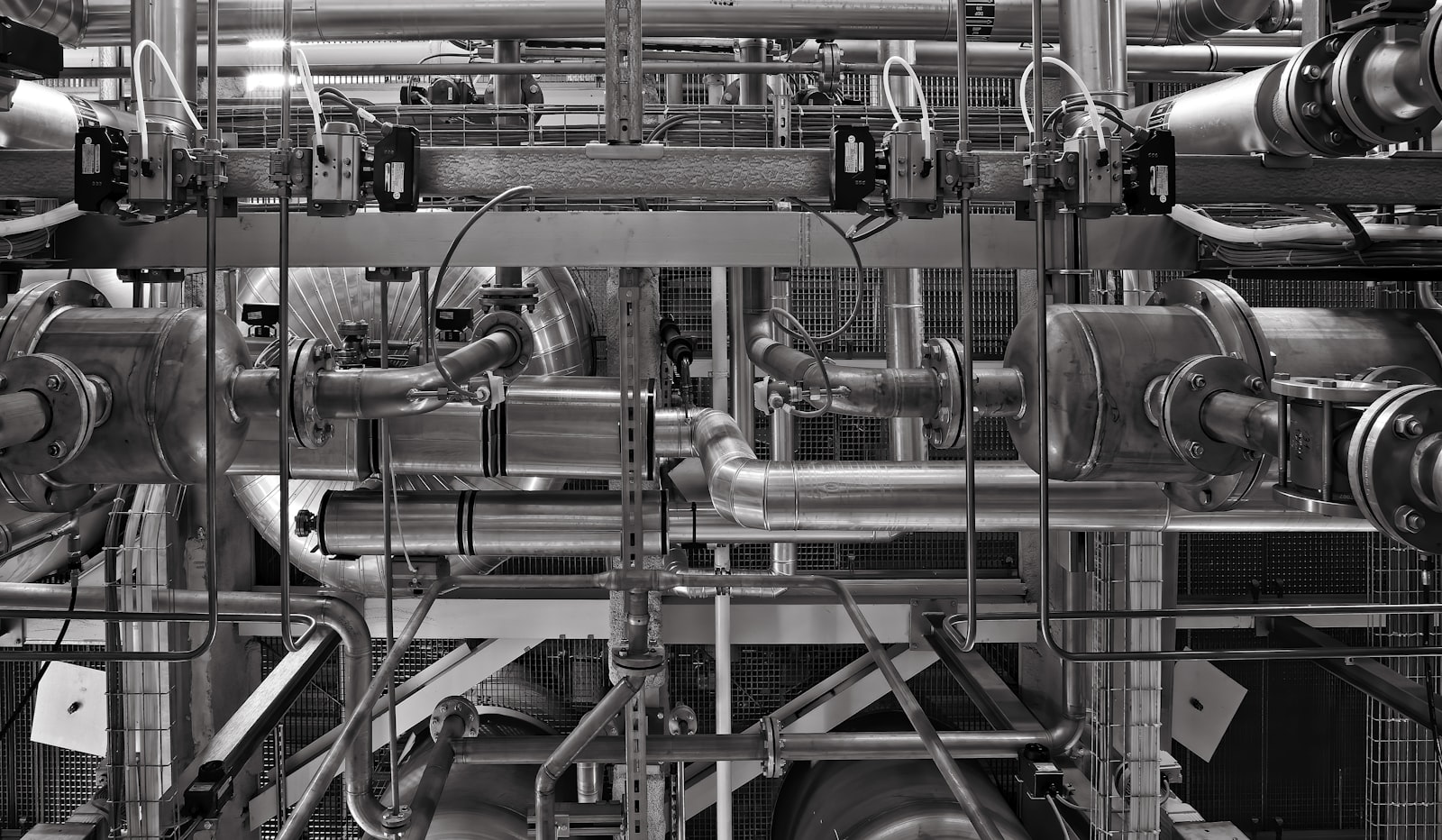
Material handling equipment lives on dusty, vibrating floors where a structural failure means downtime, so the real spec on a frame is that it does not crack, twist, or loosen at a weld under repeated impact. Nevatronix Sheet Metal fabricates the structural sheet metal and welded-tube work that carries that load for material handling OEMs and system integrators — frames, rails, guards, hoppers, and machine bases — to your engineering print, on the same welding and forming floor we run for gaming and fintech production.
What do we fabricate for material handling equipment?
- Welded tube frames and machine bases. Structural frames built from square and rectangular tube, welded square and to print.
- Conveyor side rails and guards. Formed rail sections and guard panels that run the length of a conveyor line.
- Hopper and chute assemblies. Sheet formed on our press brake to your slope and welded at the seams.
- Structural sub-frames. Weldments that carry motors, drives, and gearboxes at the load points your print specifies.
- Guard rails and safety barriers. Perimeter and pinch-point guarding formed and punched to the dimensions you supply.
- Heavy-duty mounting brackets. Punched and formed brackets that anchor equipment to floor or frame.
What tube sizes do we weld into frames?
Most material handling frames start as square or rectangular tube, and the blanks come from square and rectangular tube laser cutting on our co-located sister site — 15 × 15 mm up to 200 × 200 mm section, wall to 12 mm, length to 6.2 m. Tab-and-slot joints cut directly into the tube let frame members self-locate and self-square at weld-up, which cuts fixturing time on a repeat frame design and holds the assembly square without a custom jig. That matters most on a conveyor or rack program that repeats the same frame across dozens or hundreds of units, where a jig that drifts even slightly compounds into a line of frames that don’t stack or bolt together identically. If you already have cut blanks or bar stock, we weld to your print without re-cutting anything.
Robotic or manual welding — which fits your frame?
Two robotic welding cells (MIG primary, with TIG capability) run production frame welds inside a 1.5 × 2 × 1 m assembly envelope, holding weld placement and appearance identical across a run. Larger one-off structures, prototypes, and geometries too large or irregular for the robot go to a manual MIG/TIG bench instead of waiting on a program that would only run once. Welders on both lanes are qualified to AWS D1.1 (structural steel) and D1.2 (aluminum) procedures, with WPS/PQR documentation available on request.
What tolerances and documentation come with a sub-frame?
Frame members cut on the tube cell hold ±0.1 mm hole position and ±0.2 mm length off a single datum, so mounting holes register across a multi-member weldment instead of stacking tolerance member to member. Every production order carries a first-article inspection and full lot traceability through a MIE Trak Pro ERP, and a mid-program revision is controlled — the affected lot is identified and a new first article runs before volume resumes.
Volumes, lead times, and finish
Runs move from a single prototype to 50,000 units, with 100,000+ units delivered across our production history. Finishing runs in-house: powder coat on a 24-hour turn with 40-plus colors stocked handles most guard and frame work, and hot-dip galvanizing through a managed partner covers parts that need zinc-coat protection in a dusty or outdoor environment. Finished frames and hardware kit through our assembly cell — four bays, PEM self-clinching hardware, 300–500 units/day packout — so a shipment arrives staged to your install sequence instead of as a bin of loose parts.
Las Vegas and Henderson capacity for Southwest programs
Two facilities carry this work: roughly 50,000 sq ft in Las Vegas and a 22,000 sq ft Henderson warehouse about 15 minutes away for staging, overflow, and packout. That footprint puts Nevada, Arizona, Utah, and California within local or short-haul delivery, and the continental US reachable by standard freight for OEMs and integrators further out. An integrator running a multi-site rollout gets the same first article and the same ship-date discipline regardless of which state the install lands in — freight lane is the only variable that changes.
What don’t we do?
We fabricate the structure to your engineering design; we do not engineer the conveyor system, size structural members for load, or warranty the equipment once installed. Design input from us is limited to DFM feedback on the print you send — design, reverse engineering, or VA/VE work belongs to our parent company’s engineering group, not this shop. We also do not run titanium or other exotic alloys; mild and carbon steel, aluminum, stainless (304/316), and galvanized or pre-painted stock cover what we run.
Send a DXF or STEP with material, thickness, tube section, and quantity to our quote page, and tell us the finish and any hardware callouts. If a part is a better fit for a different process or shop, we will say so rather than force it through ours.