
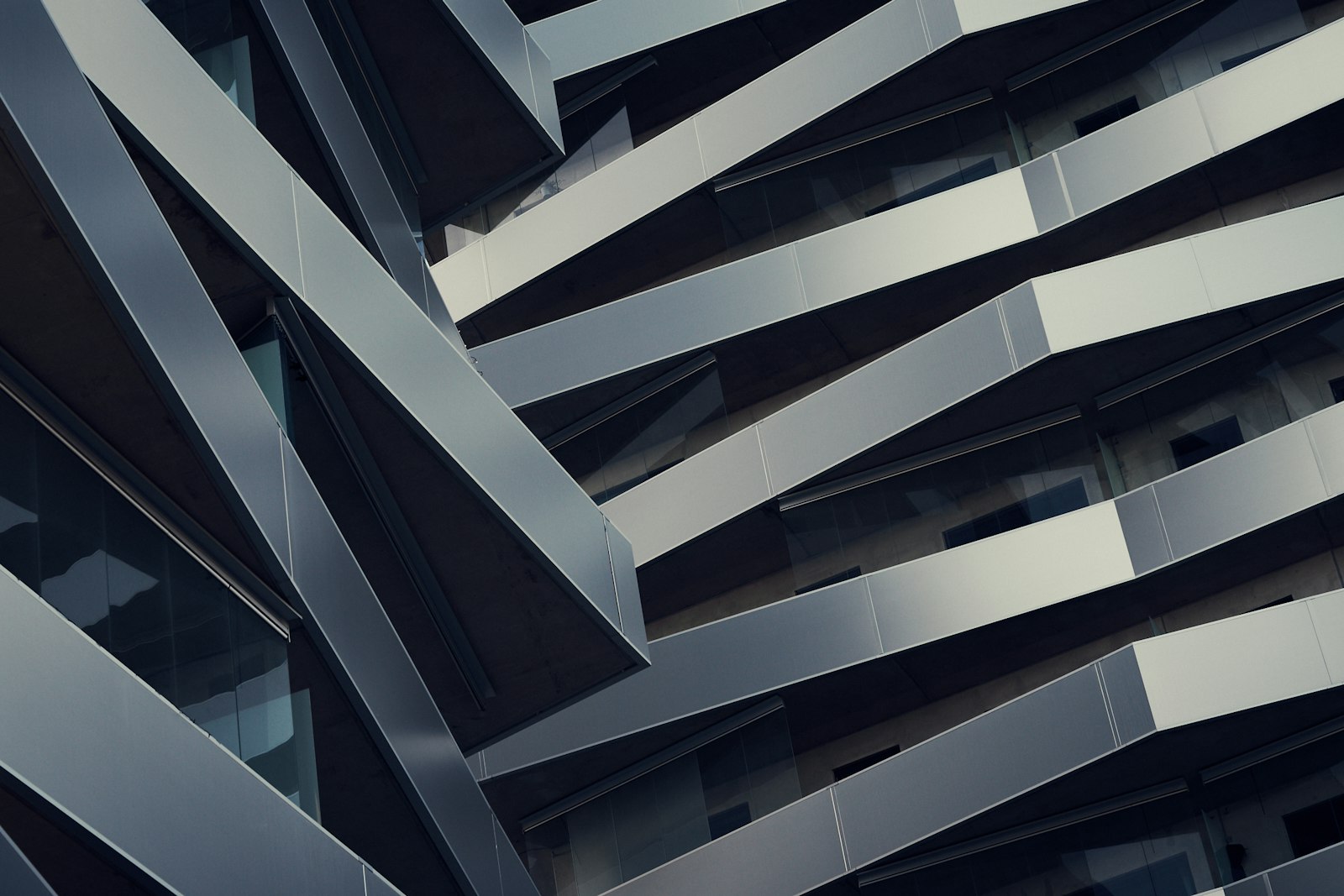
Architectural sheet metal fabrication is the formed and finished metalwork that closes out a building’s exterior and rooftop systems — the panels, railings, screens, and enclosures that are still visible once every other trade has left the site. Nevatronix Sheet Metal builds these parts to print for general contractors, architectural metal fabricators, and sign and exhibit houses working the Las Vegas hospitality and commercial market and the broader Southwest, running the same forming, welding, and finishing floor that our gaming and fintech OEM customers use for production hardware.
What do we fabricate for architectural and construction programs?
A building program pulls a wide mix of formed and finished metal, usually on a tighter schedule than the metal shop would prefer. Across a program we fabricate:
- Formed and powder-coated architectural panels. Flat and formed skins, sub-assembled where a panel exceeds single-piece bend length.
- Custom railings and guards. Tube-welded frames and infill panels, finished to the same color program as the surrounding metal.
- Decorative facades and perforated screens. Louvered and perforated patterns punched to an open-area callout, then formed and finished to print.
- Mechanical-penthouse and rooftop equipment enclosures. Weather-lapped panel systems and access doors that screen rooftop mechanical equipment.
- Structural brackets and embeds. Clip angles, hangers, and cast-in embed plates that tie formed metal back to structure.
- Roof drainage components. Scuppers and downspouts formed and seamed to the roofing detail.
How large a single-piece panel can we form?
Our press brakes run 50 to 200 tons with up to 4 m maximum bend length, so a panel skin with formed return flanges comes off in one piece up to that length, holding ±0.5° bend angle on production runs (±0.25° on critical features with secondary inspection). Panels longer than 4 m are sub-assembled with welded seams or hidden mechanical joints rather than stretched past what the brake can hold accurately. See the bend radius chart for the minimum radius by material and gauge before a design locks.
Which materials and finishes hold up on a building exterior?
Aluminum, stainless steel (304/316), and cold-rolled or galvanized carbon steel cover most architectural work, chosen against the corrosion and cosmetic requirement on the print — mild steel bends to 8 mm, aluminum to 10 mm, and stainless to 6 mm on our brakes. Powder coat is in-house on a 24-hour turn with 40+ colors stocked, and custom RAL or Pantone color matching runs an added 5 business days on lots of 100 parts or more. Where a corrosion spec calls for zinc rather than a coating, hot-dip galvanizing runs through a managed partner, coordinated into the quoted ship date.
Which welding procedures do you use for structural sub-frames?
Our welders are qualified to AWS D1.1 (structural steel) and D1.2 (aluminum) procedures — WPS-controlled and documented — for the railing sub-frames, embeds, and brackets that carry building load or guard code requirements. Robotic welding holds appearance and placement consistent across a run of identical brackets or railing sections; one-off geometry runs through our manual bays instead.
What documentation and traceability come with an architectural order?
Every production order runs under our ISO 9001:2015 quality system, with first-article inspection and full lot traceability through a MIE Trak Pro ERP — the same discipline our gaming and fintech OEM programs have run for years. Nevatronix is also a UL-listed shop. On a phased building program, that means a bracket or panel qualified on an early release stays revision-controlled when a later phase releases months out, and a mid-program change is tracked to the affected lot rather than the whole run. Fabrication runs out of our 50,000 sq ft Las Vegas facility, with a 22,000 sq ft Henderson warehouse about 15 minutes away for staging committed programs — Nevada, Arizona, Utah, and California ship locally, and the rest of the continental US ships by freight.
Where does our fabrication stop?
We build to the design in front of us. Nevatronix Sheet Metal does not engineer, stamp, or install architectural metal — the architect or structural engineer of record owns the drawing and the stamp, and the general contractor or installing trade owns the site. What we contribute beyond cutting, forming, welding, and finishing is DFM feedback on manufacturability; where a project needs design, reverse engineering, or value-engineering work, that sits with our parent company’s engineering group, not this shop. That boundary is why fabricators and GCs use us as their metal supplier instead of a competing design-build shop.
Where does laser cutting fit before forming?
Most architectural jobs start on the laser, not the brake. Panel blanks, screen perforations, and railing tube are cut by our co-located Nevatronix Laser cell before the parts ever reach forming, welding, or finishing — one PO, one ship date, no inter-shop freight for the blank.
Send a DXF or STEP with material, thickness, quantity, and finish and we’ll turn a quote against real capacity — if a panel or railing detail suits a different process or a different shop better, we’ll say so rather than force it through ours. Request a quote.