
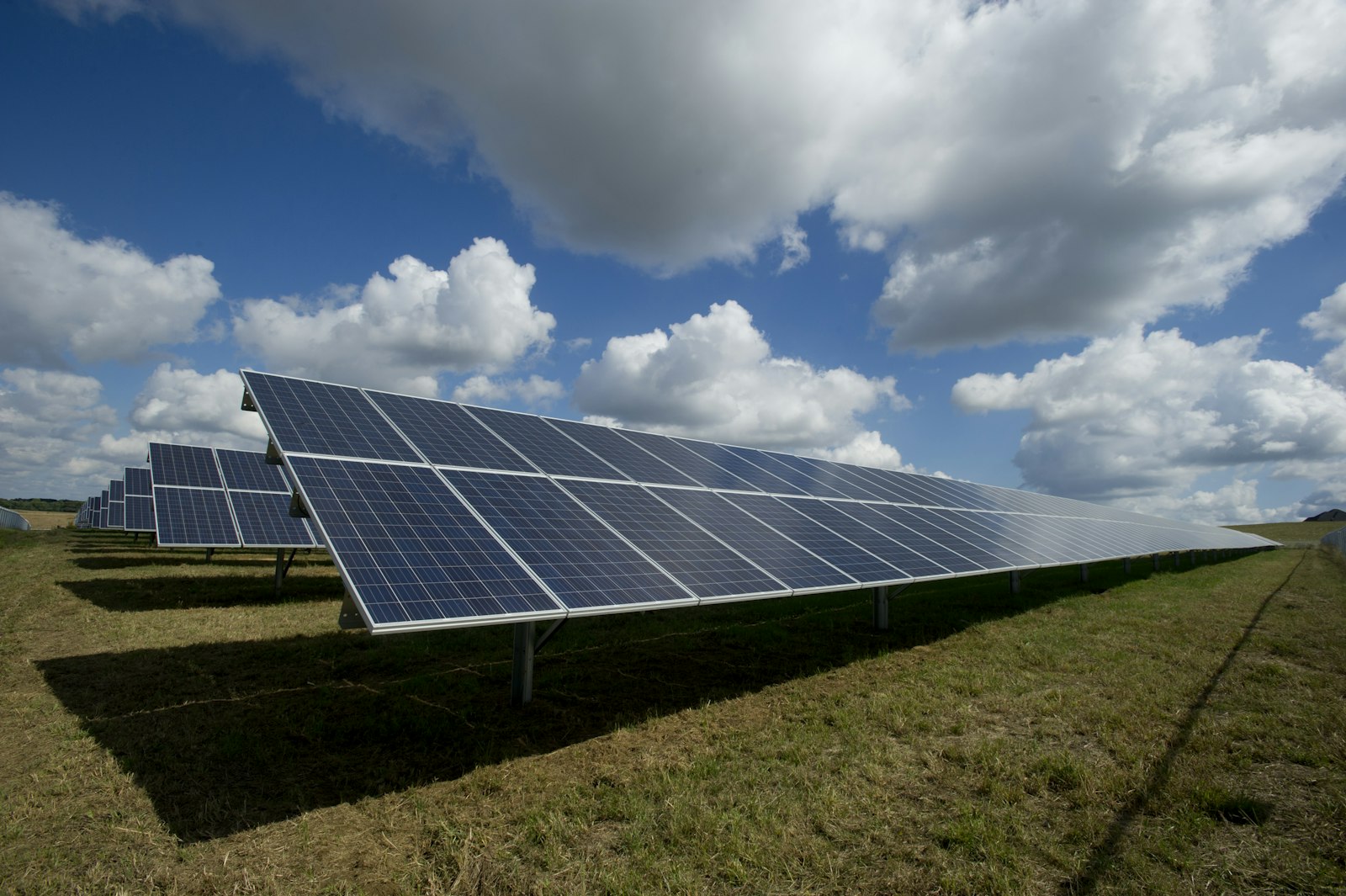
Renewable energy enclosure fabrication is the sheet metal work that houses and mounts the electronics of a solar or storage system in the field — the combiner boxes, inverter cabinets, battery enclosures, and racking components that have to survive years of sun, wind, and weather. It is ordinary precision fabrication with an unforgiving requirement layered on top: every part lives outdoors, so material choice, joint sealing, and coating are not cosmetic decisions but the difference between a ten-year service life and a warranty claim.
Nevatronix Sheet Metal builds these components to print for solar installers and renewable OEMs across the southwest US, where the market is dense and the sun exposure is extreme. Our forming, welding, finishing, and assembly cells are sized for the volume that racking and inverter programs run, and our material stock is chosen for outdoor life.
What we fabricate for solar and storage
The parts fall into a few families, and we build across all of them:
- Combiner and junction boxes. DC and AC enclosures that consolidate string wiring, built to a NEMA type with the gasketing and gland-plate penetrations the electrical design calls for.
- Inverter cabinets and mounts. String and central inverter housings, ventilation grilles, and the mounting backpans and brackets that carry the equipment on a wall or rack.
- Battery storage (BESS) enclosures. Sealed, ventilated, and thermally-managed housings for energy-storage systems, fabricated to the customer’s cooling and access design.
- Racking components. Roof-mount and ground-mount sub-frames, rails, clamps, and structural brackets — the highest-volume parts in most programs.
- Balance-of-system metal. Monitoring and gateway enclosures, rapid-shutdown boxes, cable trays, and conduit-penetration plates.
Building for the outdoors: material choices
Outdoor service starts with the base metal, and the right choice trades material cost against corrosion life and weight:
- Pre-galvanized G90 steel. The cost-effective default for racking and structural parts — the zinc coat carries most outdoor duty, and pre-galv stock needs no post-fabrication dip.
- Aluminum 5052. Where weight matters — roof-mounted equipment, hand-handled assemblies — 5052 resists corrosion natively and forms well.
- Stainless 304. For high-corrosion, coastal, or long-design-life environments where galvanized and aluminum are not enough.
The coating closes the loop. Our in-house finishing and coating cell powder coats over a corrosion primer on a 24-hour turn — the durable, UV-resistant finish outdoor enclosures need — with wet paint, anodize, and plating available through managed partners. For cut edges and welded seams on galvanized stock, we mask, prime, and coat to restore the corrosion barrier the fabrication process opened up.
One outdoor-specific detail worth catching before the design locks: mixing metals invites galvanic corrosion at the joint. An aluminum panel bolted to a galvanized frame with the wrong hardware corrodes at the interface long before the base metal fails. We flag dissimilar-metal contact on the print and match the fasteners, isolation, and coating to the material stack, so the welds, self-clinching hardware, and finish all carry the same outdoor life as the sheet they join.
NEMA-rated construction, built to your spec
Most solar enclosures carry a NEMA type — 3R for rain and ice, 4 for hose-directed water, 4X where corrosion is added to the mix. We build to the construction requirements of the type on your print: sealed-seam or continuously welded joints via robotic and manual welding, formed gasket-channel lips from the press brake, louvered or gasketed ventilation from the CNC punch, and powder coat over primer for the corrosion class.
The honest boundary is worth stating plainly, because it protects you: a NEMA or UL type rating is verified by the enclosure’s own listing and type test, which belongs to the product manufacturer or panel builder who applies the label. We fabricate to that qualified design and its documentation — accurately, repeatably, and with the sealing and finishing the type demands — but we do not hold or claim UL 50 / 50E enclosure type-certification in our own name. If you own the design and the listing, we are the shop that builds it right.
Where UL-Listed fabrication fits
Nevatronix is a UL-Listed shop operating under an ISO 9001:2015 quality system, with lot traceability through a MIE Trak Pro ERP and first-article inspection on every production order. For renewable programs that means the process discipline a listed assembly expects — revision control, documented inspection, and material certification — is standard, not an upgrade. What we bring is fabrication rigor; what stays with you is the product listing and the electrical scope. That division is deliberate: it is why installers and OEMs use us as a build partner instead of a competitor.
From prototype to 50,000 units
The same part often needs to move from a handful of field-trial units to a full production release, and we run that whole range — 1 to 50,000 units. Prototypes go through manual welding and soft tooling for fast iteration; production releases lock to dedicated fixtures and operator stations after first-article approval, with nesting and form-stack yield fixed at first article and reviewed through the run. A racking program that scales across multiple releases stays revision-controlled and traceable the entire way.
Quality and documentation for renewable programs
Renewable programs increasingly buy on documentation, and the quality system here is the same one that has served our gaming and fintech customers for two decades: ISO 9001:2015, first-article inspection on every production order, and lot traceability through a MIE Trak Pro ERP. Material certifications follow the part where a corrosion or structural spec requires them. For an installer or OEM standardizing a racking or enclosure design across multiple sites, a part qualified once stays revision-controlled and repeatable across every release — the same combiner box or inverter backpan builds identically in unit one and unit ten thousand. When a design revision lands, the change is controlled and the first article on the new revision runs before volume resumes.
How we’d quote your part
Send a STEP or DXF with material, thickness, the target NEMA type, and the gasket, penetration, and hardware callouts. We will confirm the material stack for your corrosion spec, the construction for your NEMA target, and the finishing for UV life — then quote it against real capacity. Start at our quote page; most parts turn a quote within a business day.